
How Do ESD Materials Work Physically?
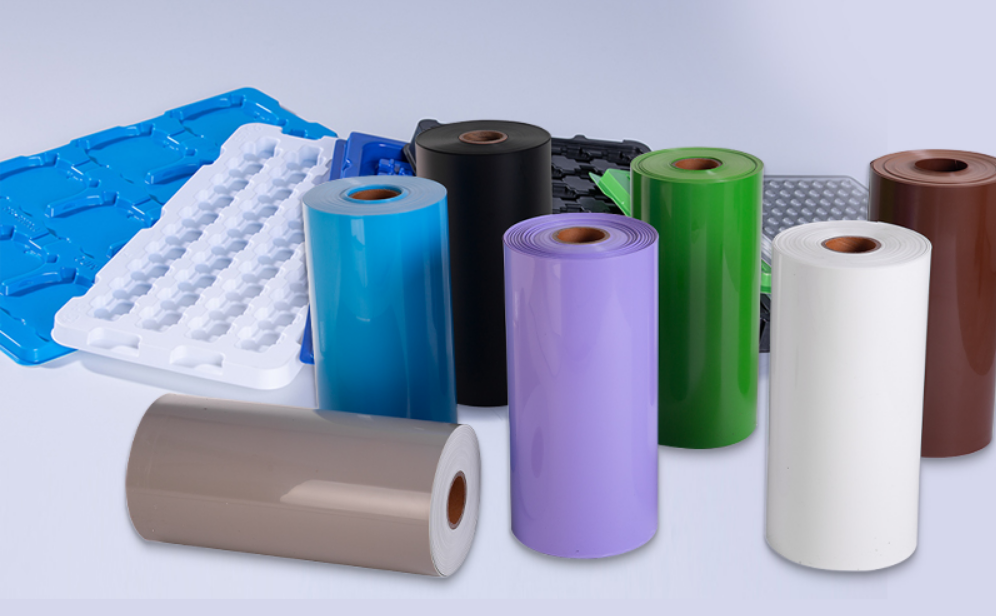
People working with static control often grapple with a common technical question: how do materials like Conductive Polystyrene Roll Stock or other ESD Material actually behave at the molecular and electrical level? Understanding the physical basis of static dissipation and conduction helps engineers choose the right materials for specific environments and risks.
At the most fundamental level, ESD material performance is judged by how easily charge can move across a surface or through a bulk volume. This is often measured as surface resistivity — a value expressed in ohms per square (Ω/sq) — which describes the resistance encountered by a static charge as it travels along a material surface. Conductive materials have lower resistivity, enabling rapid charge transfer, while static-dissipative materials offer higher resistivity but still allow controlled movement of charge away from sensitive points.
The differences between conductive and static-dissipative materials are subtle but important. A fully conductive surface might quickly transfer any built-up charge to ground, which is desirable when fast grounding is needed. Static-dissipative materials, on the other hand, slow down the discharge process so that sudden voltage spikes do not occur — this controlled behavior is beneficial in environments with particularly delicate electronics. Users in industry forums often debate when high-speed conduction is appropriate versus slower, controlled dissipation.
Importantly, achieving these electrical behaviors isn’t just about adding a conductive filler. It also requires careful control of fillers like carbon black or other conductive additives within the polymer matrix. These fillers create micro-paths for electrons to travel, and their concentration determines whether the resulting material will lie in the conductive or static-dissipative range. In materials like polystyrene roll stock, the balance of additives influences both mechanical properties and static performance.
Engineers also consider environmental effects such as humidity and temperature, which impact static charge generation and dissipation. Some ESD materials maintain stable behavior across a wider spectrum of conditions, making them more versatile for varied production environments. Knowing how these properties interrelate helps practitioners choose materials that match their operational needs.
 Spanish
 English
 Arabic
 French
 Portuguese
 Deutsch
 Turkish
 Dutch
Dutch
 Italiano
 Russian
 Romaian
 Português (Brasil)
 Greek
Greek