
Lean-Angle Sensitive ABS: How the Cornering Algorithm Differs from Standard Linear ABS Pulses
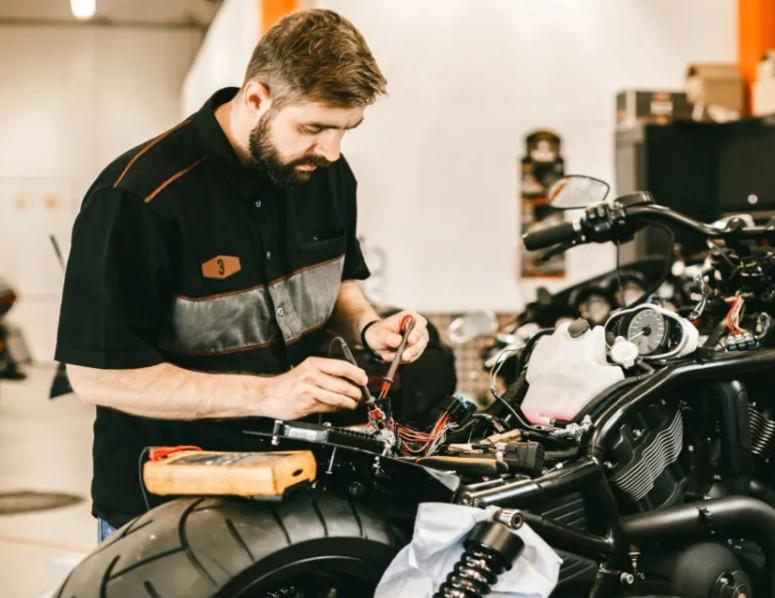
For decades, the Anti-lock Braking System (ABS) has been a revolutionary safety feature for motorcyclists, preventing wheel lock-up during emergency stops. However, traditional ABS was primarily designed for "linear" braking—scenarios where the motorcycle is upright and traveling in a straight line. The moment a rider leans into a corner, the physics of braking change dramatically. In a turn, a portion of the tire's available traction is already being used for cornering forces. If a standard ABS system triggers while the bike is leaned over, the sudden, aggressive pulses can upset the chassis, causing the bike to "stand up" or wash out. This is where Lean-Angle Sensitive ABS, often called Cornering ABS or IMU-based braking, changes the game by utilizing complex algorithms to manage braking force relative to the bike’s orientation in three-dimensional space.
The Role of the Inertial Measurement Unit (IMU)
The fundamental difference between standard ABS and Lean-Angle Sensitive ABS is the input of data from an Inertial Measurement Unit (IMU). While standard ABS only monitors wheel speed sensors to detect a slip, Cornering ABS monitors pitch, roll, and yaw. The IMU captures data at a rate of over 100 times per second, telling the bike's Electronic Control Unit (ECU) exactly how far over the motorcycle is leaned. This data is critical because the contact patch of a tire changes shape and size as the bike leans. For a home mechanic or a professional technician, understanding how these sensors interface with the braking hardware is a high-level skill. Those who wish to delve deeper into the electronics and mechanical integration of such systems often start with a comprehensive motorbike maintenance course to build the foundational knowledge required to service modern, sensor-heavy machines.
Algorithmic Pulse Modulation vs. Linear Intervention
In a standard ABS event, the system uses a binary-like logic: if the wheel speed drops too quickly relative to vehicle speed, the hydraulic pressure is released and reapplied in rapid, rhythmic pulses. Cornering ABS is far more nuanced. Instead of a standard pulse, the algorithm calculates a "slip threshold" that varies based on the lean angle. As the lean angle increases, the system becomes more sensitive, intervening much earlier and more gently. The goal is to prevent the tire from reaching its traction limit while maintaining the bike’s trajectory. By modulating the pressure in a "fluid" rather than a "pulsing" manner, the system prevents the sudden weight transfer that would otherwise cause the front end to tuck. This sophisticated software-hardware synergy is what allows riders to trail-brake deep into a corner with a significantly higher safety margin than was possible ten years ago.
Managing the Pitch and Yaw During Deceleration
Beyond just preventing lock-up, Lean-Angle Sensitive ABS manages the "attitude" of the motorcycle. When you brake hard in a corner, the bike naturally wants to stand up and go straight due to the offset forces on the tire's contact patch. The cornering algorithm compensates for this by distributing braking force between the front and rear wheels—often referred to as "linked" or "combined" braking. By applying a specific amount of rear brake automatically when the front lever is squeezed, the system creates a "squatting" effect that helps the bike hold its line. Maintaining these complex hydraulic units and ensuring the sensors are calibrated correctly is vital for safety. Riders who take a motorbike maintenance course learn that even a slightly misaligned sensor or old brake fluid can degrade the performance of these life-saving algorithms, making regular maintenance more important than ever in the digital age.
The Physics of Combined Traction Limits
To understand why the cornering algorithm is so different, one must understand Kamm’s Circle—a concept in tire physics that illustrates the relationship between lateral (cornering) and longitudinal (braking/acceleration) forces. A tire has a 100% "traction budget." If you are using 80% of that budget to lean through a high-speed sweeper, you only have 20% left for braking. A standard ABS system doesn't know about this budget; it only knows if the wheel stops spinning. Cornering ABS, however, respects Kamm’s Circle. It recognizes that in a deep lean, even a small amount of brake pressure could exceed the 100% budget. The algorithm effectively "shaves" the peak pressure of the brake system to stay within the safe zone of the tire's grip, preventing the low-side crashes that were once the terror of every canyon carver.
Diagnostic Challenges for Modern Braking Systems
Because Cornering ABS is so deeply integrated with the bike's CAN-bus system, diagnosing faults is a far cry from the "bleeding the brakes" of the past. A fault light might not indicate a mechanical failure in the calipers or master cylinder; it could be a software glitch, a faulty lean-angle sensor, or even a low battery voltage issue causing the IMU to report erratic data. Technicians must be comfortable using diagnostic software to read fault codes and check live data streams. This shift from purely mechanical work to a "tech-forward" approach is a major theme in modern workshops. This is why a certified motorbike maintenance course now includes modules on electronic diagnostics, teaching students how to bridge the gap between traditional wrenching and modern computer-aided repair.
The Future of Motorcycle Safety and Performance
As we look to the future, Lean-Angle Sensitive ABS is becoming the standard for all classes of motorcycles, from entry-level commuters to top-tier superbikes. The technology is also beginning to integrate with radar-assisted cruise control and engine-braking management. For the enthusiast, this means bikes are safer and more capable, but it also means the days of "shade-tree" guesswork are coming to an end. Understanding the "how" and "why" behind these algorithms not only makes you a better rider but also a more informed owner. By staying educated on the latest maintenance and diagnostic techniques, you ensure that your machine's safety nets are always ready to catch you, allowing you to enjoy the thrill of the ride with the peace of mind that only modern engineering can provide.
 Deutsch
 English
 Arabic
 French
 Spanish
 Portuguese
 Turkish
 Dutch
Dutch
 Italiano
 Russian
 Romaian
 Português (Brasil)
 Greek
Greek