
Key Drivers Shaping the Flame Detector Industry
Introduction
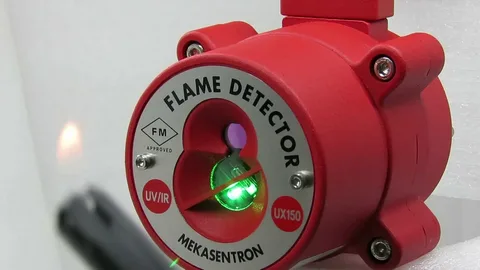
The Flame Detector Market is a crucial segment of the industrial safety and fire protection industry, focused on early detection of flames to prevent catastrophic fires and explosions. Flame detectors are optical sensors designed to identify the presence of fire by detecting characteristic radiation emitted by flames—typically in the ultraviolet (UV), infrared (IR), or combined UV/IR spectra. These systems are widely deployed in high-risk environments such as oil and gas facilities, chemical plants, refineries, power generation units, mining operations, aviation hangars, warehouses, and manufacturing plants. Unlike smoke or heat detectors, flame detectors provide rapid response and long-range detection, making them essential for protecting assets, personnel, and operations where flammable materials are present. As industries strengthen safety standards and risk mitigation strategies, flame detection systems are becoming integral to modern industrial safety architectures.
Market Drivers
One of the primary drivers of the Flame Detector Market is the increasing emphasis on industrial safety and regulatory compliance. Governments and safety authorities mandate robust fire detection systems in hazardous environments to minimize risk of accidents and operational downtime. Growth in oil and gas exploration, refining, and petrochemical processing continues to drive demand for flame detectors, as these sectors handle volatile substances under high pressure and temperature. Expansion of power generation capacity, including gas-fired plants and renewable energy facilities with energy storage systems, further supports market growth. Another key driver is the rising cost of industrial accidents, which encourages companies to invest in advanced detection technologies to avoid financial losses and reputational damage. Technological advancements improving detection accuracy, false alarm immunity, and response speed are also strengthening adoption across diverse industrial applications.
Market Challenges
Despite strong demand, the Flame Detector Market faces several challenges. High initial cost of advanced multi-spectrum detectors can limit adoption in cost-sensitive projects. Environmental factors such as sunlight, hot surfaces, welding arcs, and reflections can cause false alarms if systems are not properly selected and calibrated. Installation and integration with existing fire and safety systems require specialized expertise, increasing implementation complexity. Harsh operating environments involving dust, vibration, extreme temperatures, and corrosive atmospheres can affect sensor performance and longevity if not adequately protected. Additionally, regular testing, calibration, and maintenance are necessary to ensure reliability, adding to lifecycle costs. In some applications, users may rely on alternative detection technologies, reducing perceived need for flame detectors.
Market Opportunities
The market presents strong opportunities driven by innovation and expanding safety requirements. Development of multi-spectrum and intelligent flame detectors with advanced algorithms is reducing false alarms and improving detection reliability in complex environments. Integration with digital safety systems, industrial control platforms, and IoT-based monitoring solutions enables real-time diagnostics, remote testing, and predictive maintenance. Growth in hydrogen production, storage, and distribution infrastructure creates new demand for specialized flame detection solutions capable of identifying low-visibility flames. Emerging economies with expanding industrial bases and stricter safety enforcement offer significant growth potential. Retrofitting older facilities to meet updated safety standards also provides recurring opportunities. Additionally, increasing adoption of automated and unmanned industrial operations heightens the need for fast and reliable flame detection systems.
Regional Insights
North America holds a significant share of the Flame Detector Market due to stringent safety regulations, strong presence of oil and gas infrastructure, and high adoption of advanced industrial safety technologies. Europe represents an important market driven by strict occupational safety standards, chemical processing activity, and industrial modernization. Asia-Pacific is a rapidly growing region supported by expanding manufacturing, refining, and power generation capacity, along with improving regulatory frameworks. The Middle East is a key market due to extensive oil and gas operations and investment in large-scale energy and industrial projects. Latin America and Africa are emerging markets where industrial growth and increasing focus on safety are gradually boosting demand for flame detection systems.
Future Outlook
The future outlook for the Flame Detector Market is positive as industrial safety remains a top priority across high-risk sectors. Demand is expected to grow steadily with expansion of hazardous facilities, energy infrastructure, and advanced manufacturing. Technological innovation will focus on enhancing sensitivity, reducing false alarms, and improving performance in challenging environments. Integration with digital safety platforms and smart industrial systems will increase adoption of intelligent flame detectors. Sustainability and safety-driven investments, particularly in energy transition sectors such as hydrogen and energy storage, will further expand application scope. As industries continue to automate and prioritize risk reduction, flame detectors will remain indispensable components of comprehensive fire protection strategies.
Conclusion
The Flame Detector Market plays a vital role in protecting industrial assets and human life by enabling rapid detection of fires in high-risk environments. Driven by stringent safety regulations, industrial expansion, and advancements in detection technology, the market continues to grow across regions. Although challenges related to cost, environmental interference, and maintenance persist, innovation in multi-spectrum sensing and digital integration is addressing these issues. With increasing emphasis on operational safety, automation, and compliance, flame detectors are set to remain essential elements of modern industrial safety systems.
 Romaian
 English
 Arabic
 French
 Spanish
 Portuguese
 Deutsch
 Turkish
 Dutch
Dutch
 Italiano
 Russian
 Português (Brasil)
 Greek
Greek