
Managed Print Services Reduce Costs Improve Security And Simplify Device Management
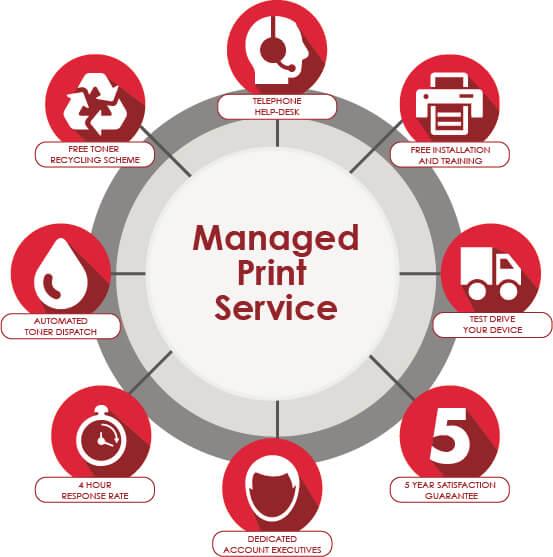
The Managed Print Services market continues to expand as organizations seek to control print spending, reduce downtime, and strengthen document security. MPS programs consolidate printer and multifunction device fleets, standardize supplies, and provide proactive maintenance to avoid disruptions. Many enterprises also adopt MPS to gain visibility into printing behavior across departments and locations, enabling policy enforcement and cost allocation. As hybrid work persists, managing distributed devices and home-office printing creates new complexity, pushing companies toward centralized monitoring and support models. MPS providers typically assess the existing fleet, recommend right-sizing, and deploy optimized devices and workflows. The service often includes consumables management, break-fix support, and reporting dashboards. By moving from ad hoc purchasing to contracted services, organizations can improve budgeting predictability while reducing the burden on internal IT teams and procurement functions significantly.
Cost optimization is a primary MPS value driver. Organizations often discover redundant devices, inefficient placement, and excessive use of high-cost color printing. MPS engagement starts with a print assessment to map usage patterns and total cost of ownership. Providers then redesign fleets with fewer, more capable devices, shifting volume to lower-cost printers and encouraging duplex printing. Centralized procurement of toner and parts reduces price variance and stockouts. Automated meter reads enable accurate billing and reduce administrative overhead. Many providers also add workflow tools such as scan-to-email, scan-to-cloud, and document routing to reduce reliance on paper. Over time, these measures reduce waste and improve employee productivity. However, realizing savings requires change management: users must adapt to shared devices, secure release printing, and print policies. Clear communication and role-based policies help maintain convenience while reducing unnecessary printing and associated costs.
Security and compliance have become essential parts of MPS. Printers are networked endpoints that can store documents, expose credentials, and provide attack paths if unmanaged. MPS providers implement device hardening, firmware updates, access controls, and secure print release to reduce risk. Authentication via badges or single sign-on helps ensure documents are not left unattended. Audit logs support compliance requirements in regulated industries like healthcare, finance, and government. Many programs also include encryption for data in transit, secure erase for device storage, and segmentation guidance for printer networks. Hybrid work adds risk because devices may exist outside traditional corporate controls, requiring remote management and standardized configuration. By treating print as part of endpoint security, organizations can reduce vulnerabilities. Selecting a provider with strong security expertise and clear incident response processes is increasingly a core procurement requirement.
MPS is evolving toward broader digital workplace services. As organizations digitize processes, print reduction initiatives are paired with document capture and automation workflows. Integration with cloud storage and collaboration suites makes scanning and routing more efficient. AI-driven analytics can identify unusual print behavior that may indicate data leakage or misuse. Future MPS programs will also emphasize sustainability through reduced paper consumption, optimized energy usage, and responsible recycling of devices and cartridges. Buyers should evaluate providers on fleet management capabilities, security controls, reporting transparency, and service responsiveness. A successful program includes baseline measurement, defined KPIs, and continuous improvement reviews. With the right governance, MPS can deliver predictable costs, improved uptime, reduced security exposure, and better support for hybrid work environments where print devices must be managed as critical infrastructure across distributed operations globally.
Top Trending Reports:
Remote Integration Solution Market
 Deutsch
 English
 Arabic
 French
 Spanish
 Portuguese
 Turkish
 Dutch
Dutch
 Italiano
 Russian
 Romaian
 Português (Brasil)
 Greek
Greek